




Worldwide battery demand grew by 35% in 2025 and exceeded 1.5 TWh, according to the International Energy Agency. Electric vehicles remain the largest market, but stationary storage has become an important additional source of demand.
Fast growth increases product choice and manufacturing scale. It also exposes the industry to concentrated mining, processing and refining. The IEA reports that the average market share of the three largest refining countries for key energy minerals is around 70%.
Why supply chains affect a storage purchase
A battery system is expected to operate for years, so the initial price is only part of its value. Availability of compatible modules, replacement electronics, firmware support and technical documentation can matter long after installation. A system with clear traceability and stable support may be less risky than an obscure product with a slightly lower purchase price.
Logistics also matters. Heavy batteries require accurate weights, compliant transport and suitable delivery equipment. Incomplete product data can cause failed quotations, incorrect shipping charges or unsafe handling. Every saleable product therefore needs model-specific specifications rather than generic claims.
Standardisation reduces avoidable risk
Common cell formats and widely supported communication protocols can make sourcing easier, but compatibility must never be assumed. The battery-management system, inverter firmware and electrical limits must match the exact model and configuration.
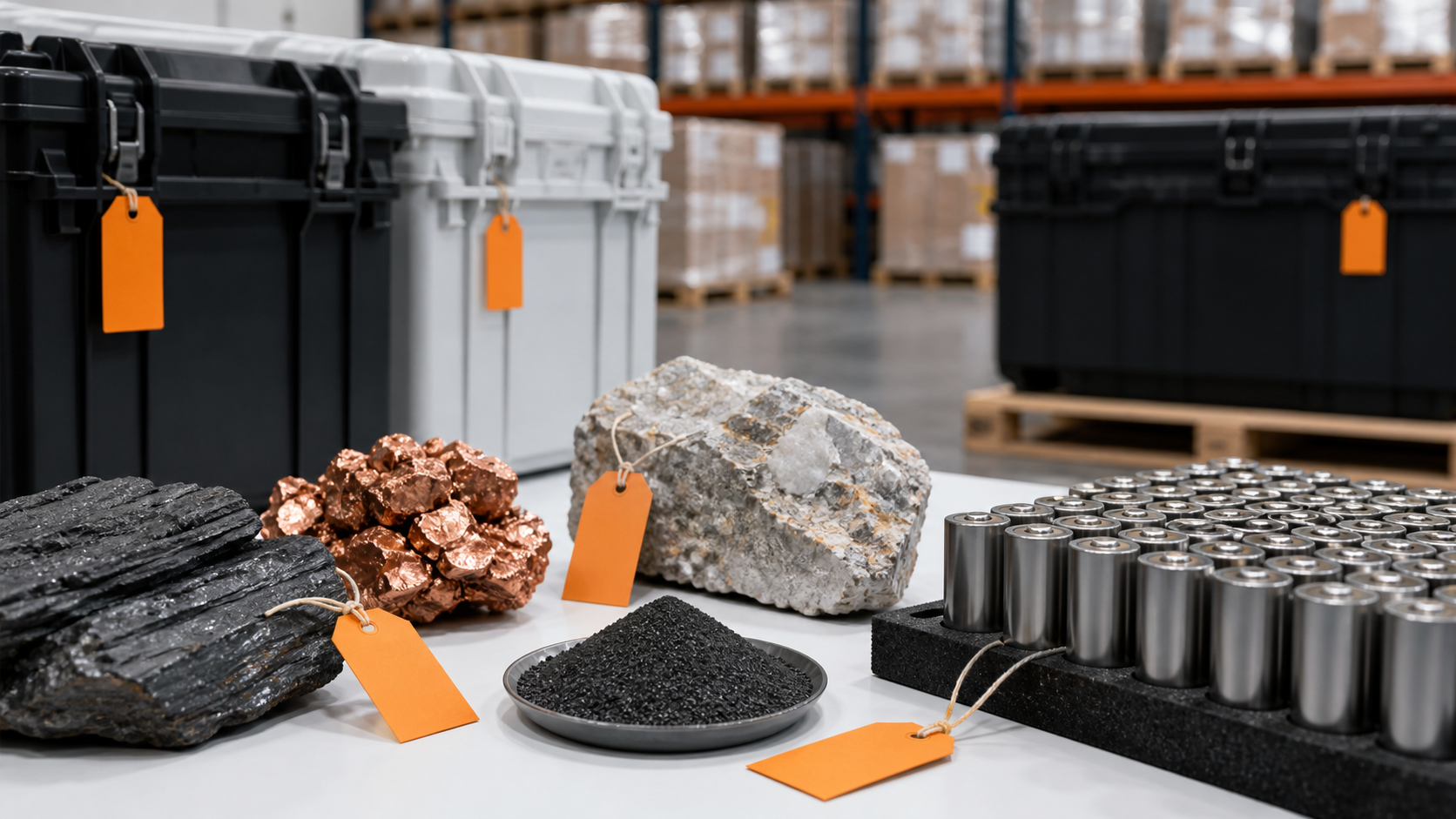
LFP has reduced dependence on nickel and cobalt in many stationary systems, yet lithium, graphite, copper and manufacturing capacity remain strategically important. Diversification and recycling will influence future resilience, but they do not replace careful supplier qualification today.
Questions worth asking before purchase
- Is the exact model and configuration clearly identified?
- Are usable capacity, current limits, dimensions and weight documented?
- Which inverter protocols and firmware versions are supported?
- Can additional modules and replacement parts be sourced later?
- Are transport, installation and end-of-life responsibilities defined?
- Is the warranty backed by an identifiable supplier?
WodaTherm is building product pages around those practical questions, with local datasheets and detailed logistics information. The aim is to help buyers compare complete systems without sending them away to another shop.
Primary source: International Energy Agency · source language: English · published: 2026-07-16. This is an original WodaTherm™ briefing, not a copy of the source publication.