



Description
WodaTherm™ SD-IHC · SKU WTH-SD-IHC
Give your water heater and electric heating an intelligent upgrade — and cut your energy bills.
Ready to make your home smarter and spend less on heating? WodaTherm™ AI SD-IHC helps you put surplus solar energy, cheaper off-peak electricity and intelligent energy management to work. Whether you are buying a water heater or upgrading the heating elements in your electric or storage heating, this compact controller gives you control over when they run, where their energy comes from and how much power they use. Connect your heating to Shelly Smart Control and your home’s solar or energy-management system, set your priorities and let the automation take care of the routine.











How much could you save?
Take 2,000 kWh of usable surplus solar electricity a year. With peak electricity at CZK 6/kWh, off-peak electricity at CZK 3/kWh and an export payment of CZK 0.50/kWh, the savings work out as follows.
| Where you save | Saving |
|---|---|
| Without solar: heat at off-peak rates instead of peak rates | CZK 6,000/year |
| Use surplus solar instead of peak-rate electricity | CZK 11,000/year |
| Use surplus solar instead of off-peak electricity | CZK 5,000/year |
| A basic water heater with a mechanical thermostat plus our WodaTherm™ AI SD-IHC smart controller, instead of an expensive “smart” water heater with a simple timer | CZK 13,102 upfront |
Smart heating should do more than follow a timer. Control it around your solar surplus, electricity prices and preferred heating power. Use the Shelly app for hands-on control, or connect it to a wider energy-management system that uses AI.
Pay for control you will actually use. We bring the smart features to a basic water heater.
Smart control for the equipment you already own
Why pay a premium for a “smart” water heater when its smart features often stop at scheduled heating? WodaTherm™ AI SD-IHC brings together control based on solar surplus, electricity prices, time and power. It works with water heaters with mechanical thermostats, electric heating elements, the heating elements in storage heaters, heating coils and radiant heaters with the corresponding resistive element. Our device lets you add intelligent control for a fraction of the price of an expensive “smart” water heater.
The same approach gives you more control over electric and storage heating elements: match heating to the energy you have, the electricity price and your daily routine, with the Shelly app always within reach.
With this device, you can:
- Automate when your heating runs. Set the rules around your household’s needs. Your automation can decide when to start, adjust power as conditions change and stop heating according to your chosen routine.
- Heat using surplus solar only. With the corresponding metering and energy management in place, make surplus PV electricity your chosen source of heat. The system follows the available power and adjusts the heating load, turning electricity from your roof into hot water or stored warmth.
- Choose the electricity price you are willing to pay. Heat at cheaper overnight rates or during other low-price periods. When hot water is the priority, you can also allow heating at higher prices. Your automation uses your tariff or an electricity-price data source to make those choices.
- Take control from your phone. Use Shelly Smart Control on your phone, tablet or computer whenever you want to adjust the heating yourself. Remote access through your Shelly account gives you control while you are away.
- Set the times that suit your household. Choose heating windows by hour and day: while your solar panels are generating, during off-peak periods or ahead of your usual hot-water demand. Combine schedules with your other automation rules.
- Choose heating power and speed. Use a smaller amount of available power for a slower heat-up, or increase power when you want heat sooner. Set power levels, switching thresholds and priorities for your control system to follow.
Choose the combination that suits your installation. Automatic regulation brings together metering, the relevant data and the configured control system.
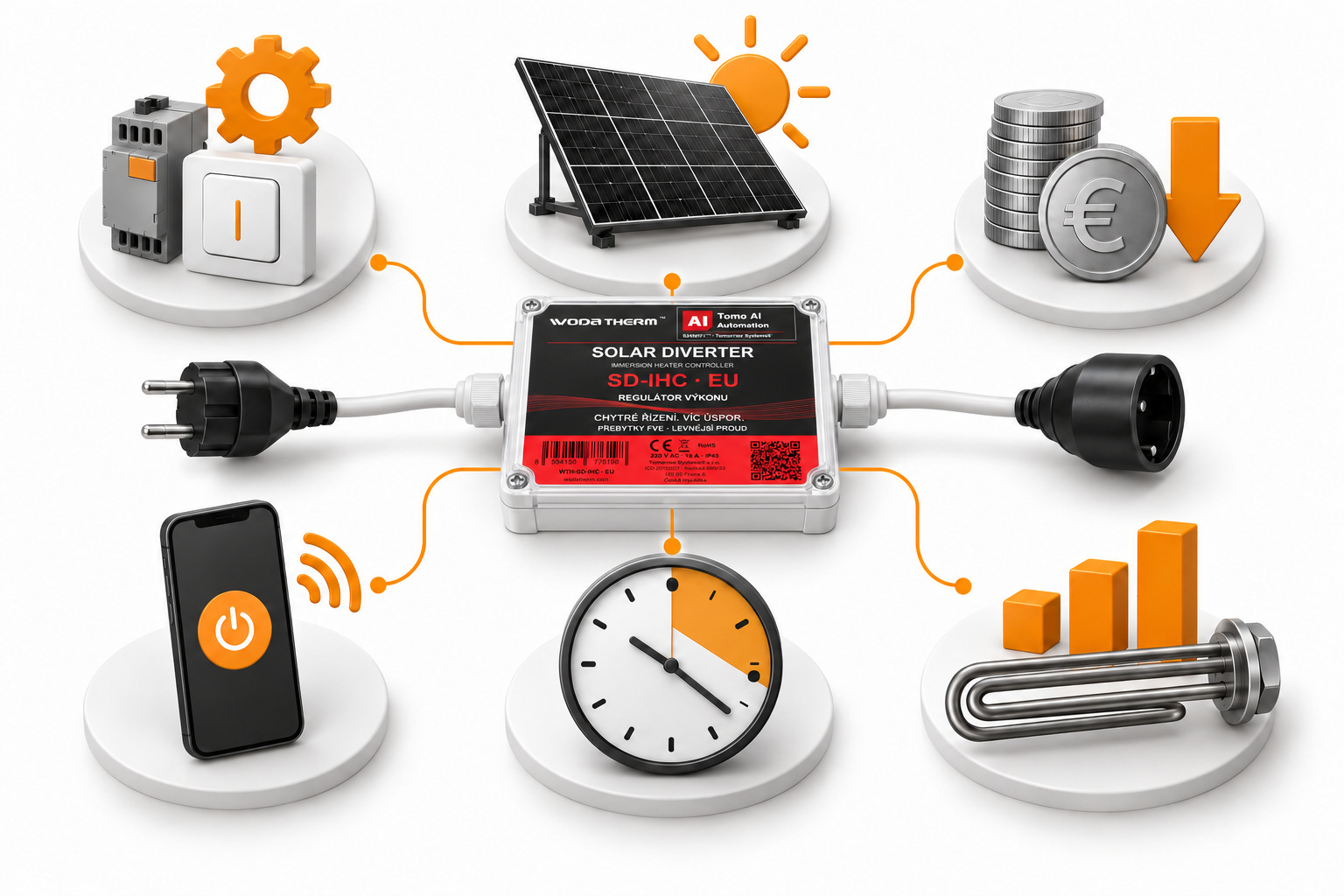
Buy a simple water heater. We supply the smart control.
Buying a new water heater? Choose an affordable, straightforward model with the corresponding resistive heating element. WodaTherm™ AI SD-IHC supplies the intelligent control through your configured automation. Save the premium charged for digital or “smart” controls that often do little more than switch the heating on and off at set times.
Against a “smart” water heater costing CZK 30,000 or more, compare the price of a basic heater, our controller at CZK 8,898 including VAT, and installation. After the controller alone, at least CZK 21,102 remains from that comparison budget for the heater and installation. With the right choice of components, the upfront saving can reach CZK 10,000. Add potential annual savings of up to CZK 11,000, as shown in the table.
Keep more of the value of your solar energy
Use electricity from your own panels to replace part of the energy you would otherwise buy for heating. An annual saving of CZK 8,000–12,000 corresponds to using 2,000–3,000 kWh of surplus energy at a net benefit of CZK 4/kWh. That net benefit accounts for the avoided electricity purchase and the export payment you give up. Your generation, usable surplus, electricity prices and demand for heat determine the saving for your home.
The Shelly app, solar automation and AI energy management
Start with manual control in the app, use heating schedules or make your heating part of your home’s energy management. A connected supervisory system can also use AI to decide how and when to heat. SD-IHC turns that system’s heating request into power for the heating element, using the configured combination of devices, metering and data.
One controller. Your priorities.
Prepare hot water in your chosen morning window. During the day, follow surplus solar generation and adjust heating as other appliances switch on. In the evening, choose your own settings in the app. Your system’s configuration determines which rules take priority, giving you heating that fits the way you live.
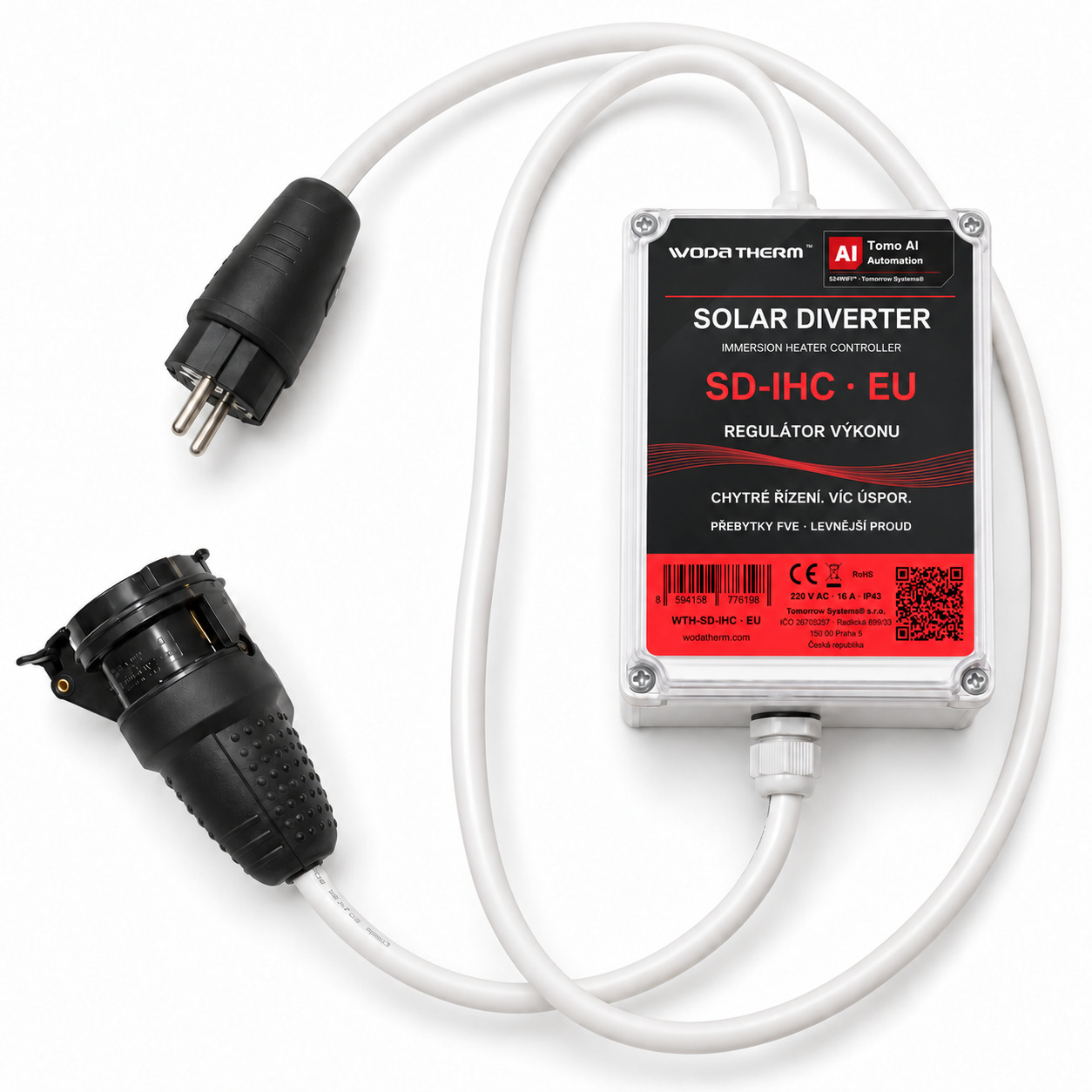
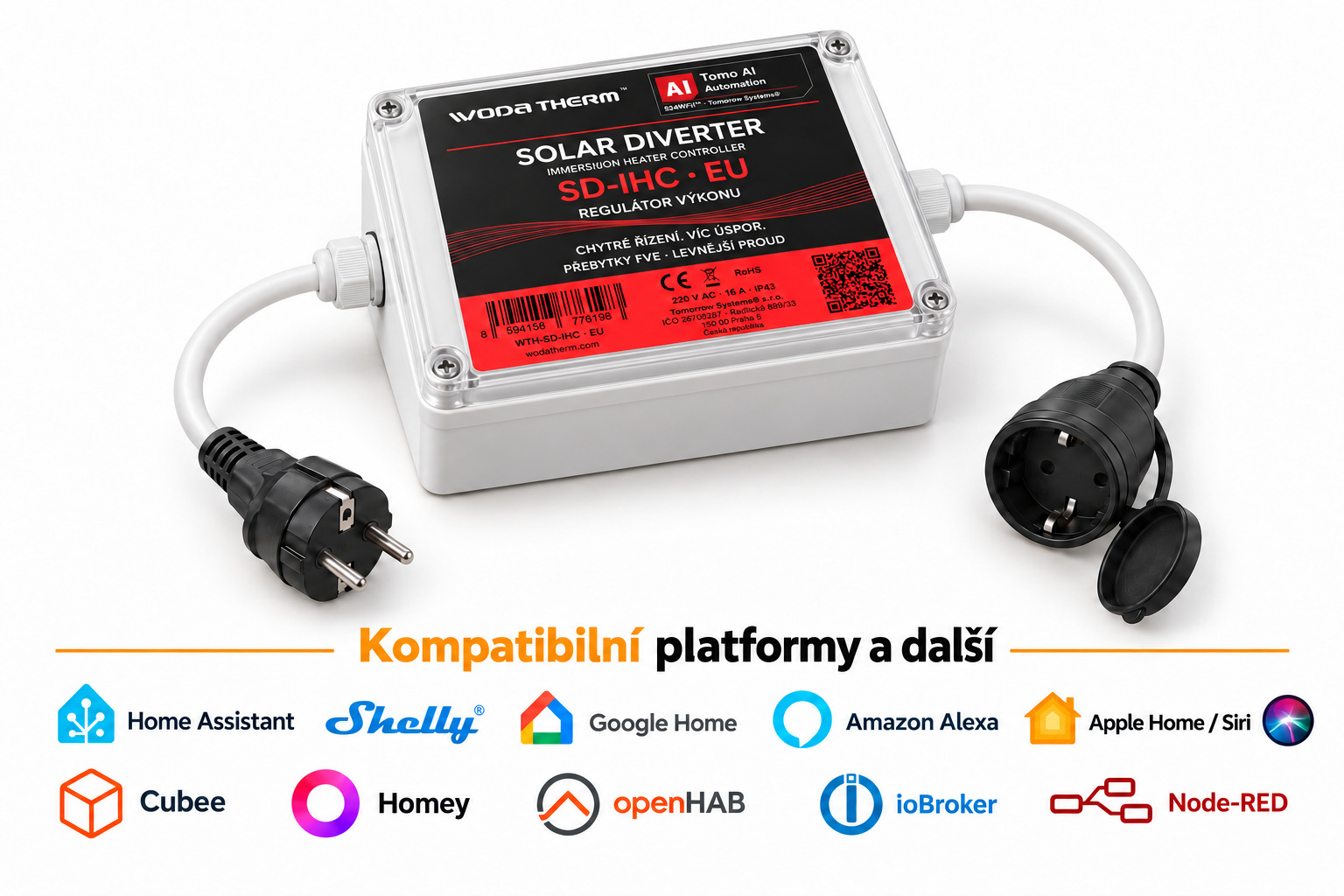
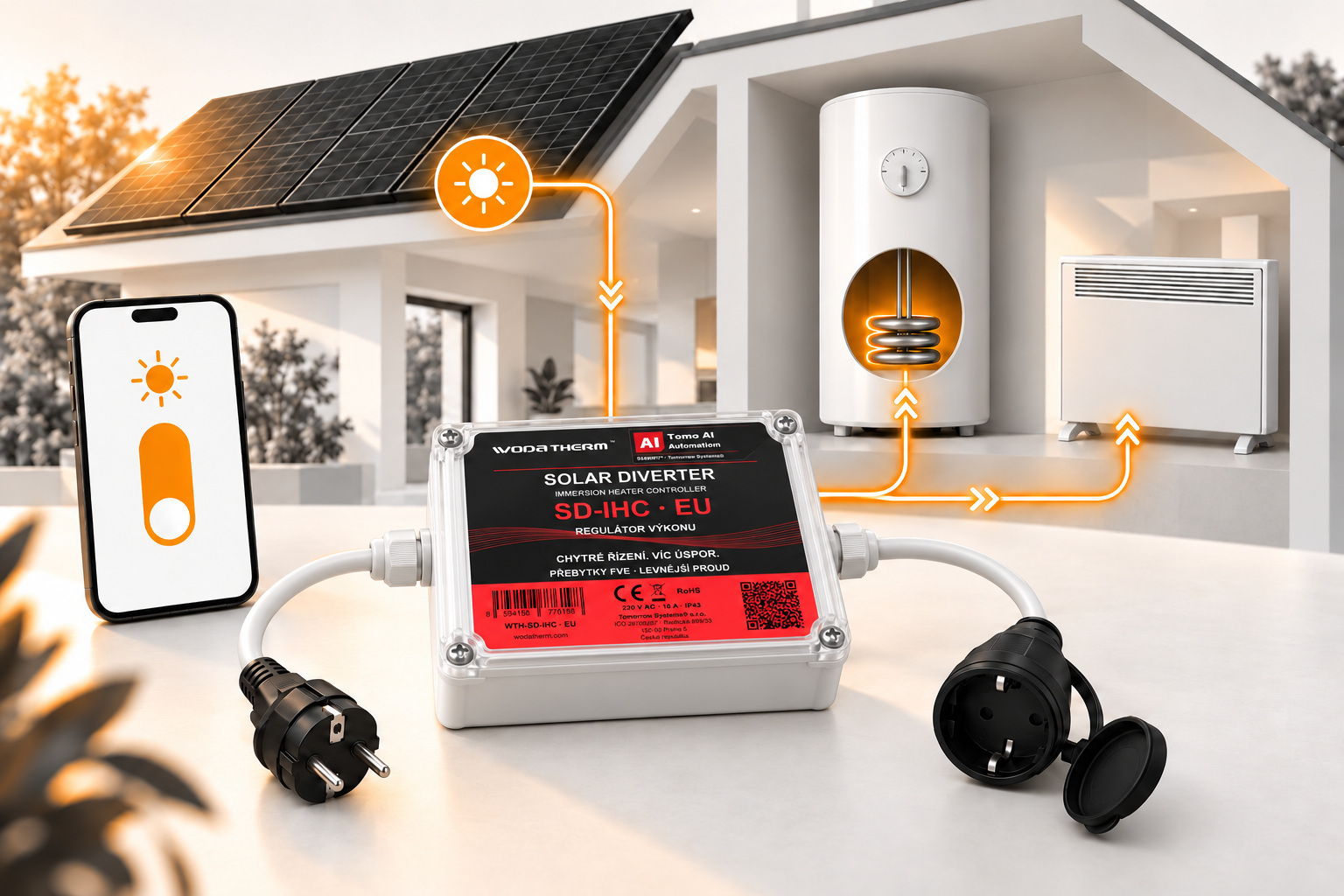
The compact enclosure has a mains plug on one side and an output socket on the other. It brings simple heating equipment into your home’s smart energy system.
Model: SD-IHC. SKU: WTH-SD-IHC.
More ways to put it to work
Hot water in step with your solar generation
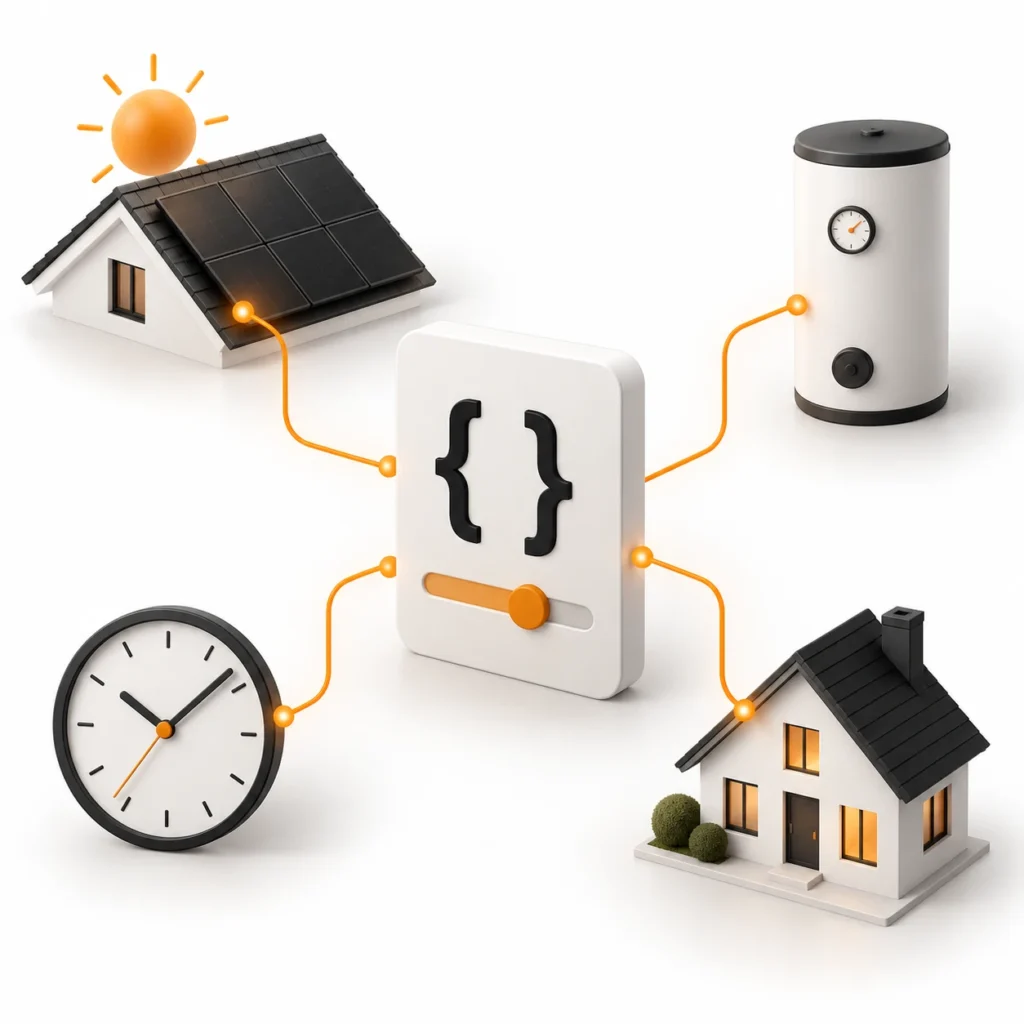
Solar output, household electricity demand and hot-water use each follow their own pattern. Power regulation brings them together. Your energy-management system monitors the available readings, sets priorities and decides how much energy to send to heating. SD-IHC applies that request to the resistive heating element.
A hot-water cylinder gives you somewhere to store useful energy for later. The volume of the cylinder, the temperature you want, water use and the available surplus all contribute to how your system works. Your energy management can distribute electricity between the battery, hot water and other appliances around those needs.
Your automation makes the decisions. SD-IHC delivers the power.
The supervisory solar or home-automation system gathers generation and consumption data, sets priorities and sends the power request. SD-IHC controls the heating circuit accordingly. This clear division lets heating become part of a shared energy plan for the home.
Depending on the chosen platform, that plan can take account of household consumption, battery charging, hot-water demand and heating comfort. Set priorities, schedules and reserves in the automation platform you use.
A compact controller with clearly separated connections
The plastic enclosure has a cable-mounted mains plug at one end and a cable-mounted output socket at the other. The two ends make the supply and controlled output easy to identify. The orange, black and white WodaTherm™ SD-IHC label keeps the device recognisable in your home’s utility area.
The product images are visualisations of this enclosure and connection layout.
Useful heat for water and storage heating elements
Alongside hot water, the same control principle can be used for compatible resistive elements in electric and storage heating. A water cylinder or thermal store holds energy for the hours when your household needs it. Your energy-management rules decide how to divide available power between heating, battery charging and other loads.
How it works through the day
The process starts with measured energy flow. Your automation considers the household’s priorities and sets a heating request. When another appliance starts, it can reduce heating power, then increase it again as more electricity becomes available.
Build the routine around when you need hot water and how you want to control the system locally. The result is heating that follows your household and your available energy.
Technical specifications
Supply: 220 V AC. Rated current: 16 A. Ingress protection: IP43. Weight: 1.2 kg. Dimensions: 110 × 150 × 95 mm. The device includes a suppression component to reduce electromagnetic interference produced during heating-power regulation.
More platforms and apps
SunnyHome · Cubee · Home Assistant · Shelly Smart Control · Google Home · Amazon Alexa · Apple Home / Siri · Samsung SmartThings · Homey · openHAB · ioBroker · Node-RED · Hubitat · Control4 · Crestron · Symcon and more.
Home AssistantShelly Smart ControlGoogle HomeAmazon AlexaApple HomeCubeeSamsung SmartThingsHomeyopenHABioBrokerNode-REDHubitatControl4CrestronSymconSurplus diverter for controlled household demand
With energy metering and a configured automation system, WodaTherm™ SD-IHC works as a solar surplus diverter. When generation exceeds household demand, controlled heating increases your own consumption and stores energy in hot water or suitable thermal storage. This also provides a useful controllable load in systems configured for zero export.
The automation monitors generation and consumption and sends a power request to SD-IHC. Heating can increase as more solar power becomes available and decrease when other appliances start or solar output falls.
Shared electricity for hot water and remote heating*
Use WodaTherm™ SD-IHC to control water or storage heating at another address according to energy shared from your solar installation. A supervisory automation system (a simple Shelly script) follows available solar output and the configured sharing allocation. You can set heating to run only on energy available for sharing.
Distance does not determine the remote-control command: the sites communicate over a configured data connection. A family home, holiday property or business can receive a heating request from the automation associated with the generating site.
How generation and consumption work together
In Czechia, Elektroenergetické datové centrum (EDC) registers sharing groups and evaluates their shared electricity. Generation and consumption are matched within the same 15-minute interval. Remote heating helps align consumption at the receiving site with available generation. For projects elsewhere, the selected local sharing programme supplies the allocation and time framework.
A simple Shelly script connects solar output and remote heating
The script uses available generation data and the configured sharing proportion to send heating-power requests over the data connection. It can raise power as generation grows, lower it as available energy falls and pause heating when the sharing energy is no longer available. Your hot-water cylinder or suitable resistive storage heater stores the energy for later use.
Example: solar panels at home, hot water at your holiday property
After household demand is covered, solar output becomes available for sharing. The script evaluates the share assigned to the holiday property and sends a request to its SD-IHC. Heating then follows the available energy. The same principle can be used for suitable resistive storage-heating elements.
We will gladly advise on setup and prepare or adapt a Shelly script for your system on request. The official sharing allocation is shown in the relevant scheme’s records.
Energy-sharing options by country
Remote control connects distant sites over a data connection. Shared energy is used within the local sharing scheme and its geographic area.
- Czechia: EDC. Registration and allocation of electricity-sharing groups.
- Germany: Bundesnetzagentur. Official Energy Sharing guidance; sharing providers coordinate implementation with the local grid operator.
- Austria: Österreichische Koordinationsstelle für Energiegemeinschaften. Guidance on energy communities and the right local sharing model.
- Austria: data exchange: EDA. EDA data-exchange infrastructure; current market-participant registration procedures are provided via ebUtilities.
- France: Enedis. Autoconsommation collective: local generation sharing between participating sites.
- Other European countries: Citizen Energy Advisory Hub. The official European map of citizen energy projects helps you find local initiatives.
Reviews
There are no reviews yet.